
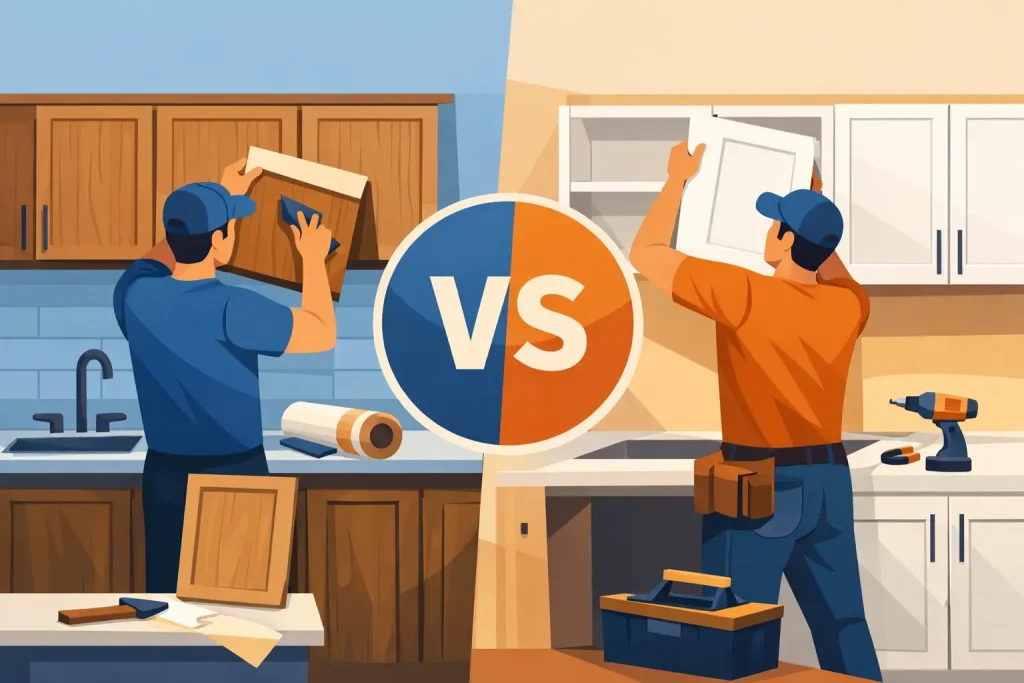
A kitchen can look tired long before it stops working. That is why cabinet refacing vs replacement is such a common question for homeowners who want a fresh look without spending more than they need to. The right answer depends on what shape your current cabinets are in, how much you want to change, and whether your layout still works for the way you live.
If your cabinet boxes are solid, your doors are dated, and the room mostly needs a visual upgrade, refacing can be a smart move. If the cabinets are damaged, poorly built, or your kitchen setup frustrates you every day, replacement usually makes more sense. The key is being honest about whether you are fixing cosmetics or solving a deeper problem.
Cabinet refacing vs replacement: the basic difference
Cabinet refacing keeps the existing cabinet boxes in place. The visible exterior gets updated with new doors, drawer fronts, hardware, and a new veneer or laminate finish on the face frames and exposed sides. From the front, the kitchen can look dramatically different, even though the main cabinet structure stays where it is.
Cabinet replacement means removing the old cabinets and installing new ones. That gives you the chance to change cabinet sizes, alter the layout, improve storage, and start fresh with new materials from top to bottom. It is a bigger project, but it gives you far more control over the final result.
For many homeowners, this choice is really about scope. Refacing is a surface-level transformation with less disruption. Replacement is a full reset.
When refacing is the better value
Refacing is often the better value when your cabinets are still structurally sound. If the boxes are level, the shelves are solid, and the drawers operate well, there may be no reason to tear everything out just because the style feels old. New doors, updated hardware, and a clean finish can make an older kitchen feel current again.
It also works well when you want to limit downtime. A full cabinet replacement can affect countertops, plumbing, flooring, and sometimes electrical work. Refacing is usually more contained. That matters if you are trying to improve your kitchen without turning your home upside down for weeks.
Cost is another reason homeowners lean toward refacing. While pricing varies by material and kitchen size, refacing is generally less expensive than full replacement because you are reusing much of what is already there. If your main goal is appearance and your budget has limits, that can be a practical path.
Refacing can be especially appealing if you are also planning related updates like wall paint, backsplash work, or new light fixtures. Instead of putting all your budget into brand-new cabinets, you can spread it across the room and create a bigger visible improvement overall.
When replacement is worth it
Replacement becomes worth it when the existing cabinets are worn out or the layout no longer serves the space. Swollen particleboard, water damage under the sink, sagging shelves, broken drawer boxes, and cabinets that were cheaply built from the start are all signs that refacing may only cover up problems.
It is also the better option if you want a different kitchen footprint. Maybe you need deeper drawers, taller upper cabinets, an added pantry, or a better workflow around the stove and sink. Refacing cannot solve layout issues because it keeps the cabinet boxes in the same place and in the same dimensions.
Some kitchens have been patched together over the years and simply do not function well anymore. In that case, replacing the cabinets gives you the chance to improve storage, clearances, and everyday use. That is a bigger investment, but it can pay off in convenience every single day.
There is also the matter of long-term planning. If this is the kitchen you expect to live with for many years, replacement may make more sense than putting money into cabinet boxes that are already near the end of their useful life.
Cost matters, but so does what you get
A lot of homeowners start with price, and that is understandable. Cabinet replacement usually costs more because it includes demolition, disposal, new cabinets, installation, and often related work. Once cabinets come out, other updates may follow. Countertops may need to be replaced. Walls may need repair. Floors sometimes reveal hidden issues. The budget can grow fast.
Refacing usually has a lower starting price and fewer surprises, but it is not cheap in every case. If you choose premium door styles, specialty finishes, soft-close hardware, or add extras, the cost can climb. That is why the better question is not just Which one costs less, but Which one gives me the result I actually need?
A lower-cost job is not automatically the better value if it leaves you with storage problems or failing cabinet boxes. On the other hand, a full replacement is not automatically the smart move if your cabinets are in good shape and your main complaint is appearance.
For budget-conscious homeowners, this is where clear estimates matter. Seeing the numbers side by side often makes the decision easier. A contractor who can explain what is cosmetic, what is structural, and what can wait helps you spend with more confidence.
Cabinet refacing vs replacement for resale
If you are getting ready to sell, cabinet refacing vs replacement becomes a different conversation. Buyers notice kitchens fast, but they do not always care whether every cabinet box is brand-new. What they usually respond to is a clean, updated, well-maintained space.
If your current cabinets are solid and the kitchen layout is acceptable, refacing may be enough to improve the look for listing photos and showings. Fresh cabinet fronts, updated color, modern hardware, and coordinated paint can make the kitchen feel more current without the cost of a full renovation.
If the cabinets are visibly damaged, mismatched, or the kitchen layout feels cramped and awkward, replacement may have stronger appeal. Still, resale projects should be approached carefully. Overspending on a high-end cabinet package does not always return dollar for dollar. The best move is usually the one that makes the kitchen look clean, functional, and cared for at a sensible cost.
How the rest of the kitchen affects the choice
Cabinets do not exist on their own. They sit next to wall color, flooring, counters, trim, and lighting. That is why the smartest decision often comes from looking at the whole room instead of treating cabinets as a standalone issue.
If your kitchen layout works and you are already planning cosmetic upgrades, refacing can fit well into a broader refresh. New cabinet fronts paired with professional painting, updated hardware, and minor finish work can produce a major before-and-after without full demolition.
If your counters need replacing, your backsplash is coming off, and the floor is being redone, that may be the moment to consider full replacement. Once several major surfaces are already in play, starting fresh with the cabinetry can be more logical than trying to preserve part of the old setup.
This is especially true in older homes around the Kansas City metro, where kitchens may have gone through multiple updates over time. Sometimes the room can be improved in layers. Other times, those layers reveal that the best move is to rebuild the cabinet system properly.
Questions to ask before you decide
A good contractor should help you sort through a few practical questions. Are the cabinet boxes still in good condition? Do you like the current layout? Are the drawers and shelves meeting your storage needs? Are you trying to improve appearance, function, or both?
It also helps to ask how long you plan to stay in the home. If this is a short-term update, refacing may be enough. If this is your long-term kitchen and daily frustration is part of the problem, replacement may be worth stretching for.
Another question is how much disruption you can realistically handle. Some families want the biggest possible transformation. Others need the project to stay simple, controlled, and affordable. Neither approach is wrong. The right one is the one that fits your home, schedule, and budget.
For homeowners who have delayed kitchen work because of cost, payment flexibility can make a real difference. That is one reason companies like Half Now Half Later Painting & Remodeling LLC focus on keeping improvement projects more accessible with free estimates and no-interest labor financing. A clear plan is easier to move forward with when the upfront pressure is lower.
The right choice is the one that solves the real problem
If your kitchen feels dated but works well, refacing can be a practical way to improve the look without taking on a full remodel. If your cabinets are failing or the layout wastes space, replacement is often the smarter long-term fix. The mistake is paying for a cosmetic update when the structure is shot, or paying for a full tear-out when your cabinets mostly need a facelift.
A useful next step is to stop looking at online photos for a minute and look closely at your own kitchen. Open every drawer. Check under the sink. Think about how you move through the room each day. The best project starts with an honest read on what is actually bothering you, because that is what leads to a result you will still feel good about long after the work is done.