
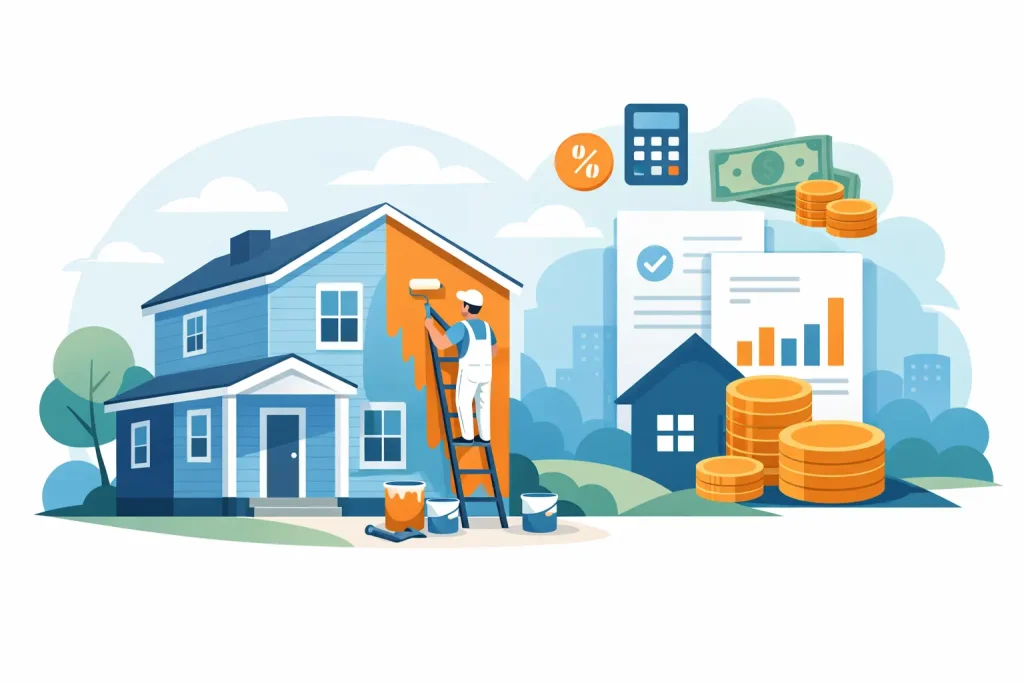
A lot of homeowners ask the same question right after they see an estimate: can you finance house painting, or do you need to pay the full bill up front? The short answer is yes, in many cases you can. Whether that is a smart move depends on your budget, the condition of your home, and how the painter structures pricing and payment terms.
Painting is one of those projects people often delay because it feels optional until it stops being optional. Interior walls start showing wear. Exterior paint begins peeling or fading. Trim takes on moisture damage. By the time many owners are ready to act, the project cost is larger than they expected. Financing can help bridge that gap, but it works best when you understand what you are paying for and what kind of agreement you are signing.
Can You Finance House Painting for Interior or Exterior Work?
Yes, house painting can often be financed for both interior and exterior jobs. Some contractors offer payment plans directly, while others work through third-party financing companies. In some cases, financing applies only to labor. In others, it may cover the full project, including materials, prep work, repairs, and cleanup.
That detail matters. A basic repaint of one or two rooms is very different from a full exterior project that includes scraping, caulking, priming, wood repair, and multiple coats. If a financing offer sounds simple, ask what is actually included. A lower monthly payment can still be expensive if it excludes needed prep or pushes major costs into a separate invoice.
For many homeowners, the biggest benefit is timing. Instead of waiting another season to repaint a worn exterior or living with damaged interior walls, financing can let you move forward when the work is needed. That can protect the home and improve how it looks without requiring one large payment at once.
How painting financing usually works
There is no single model for financing house painting. Some contractors require a deposit and split the rest into scheduled payments. Others offer promotional terms, including no-interest periods on labor costs. Third-party lenders may approve a fixed amount and set a repayment schedule based on your credit profile.
The most common setup is straightforward. You get an estimate, review the total scope, and then choose whether to pay in full or spread out the cost. If financing is available, the contractor should explain the term length, monthly payment amount, interest or no-interest conditions, and any penalties for missed payments.
This is where homeowners need to slow down and read carefully. A payment plan is only helpful if the terms are clear. If the monthly number looks manageable but the contract is vague about what happens after a promotional period, ask questions before signing.
What costs can be included?
It depends on the contractor and the financing program. Some plans cover the whole job. Others are more limited.
A painting estimate may include surface prep, patching, sanding, caulking, primer, finish coats, cleanup, and labor. On exterior work, it may also include minor carpentry or repair if damaged boards or trim need attention before paint can be applied properly. On interior work, it could include drywall repair, texture matching, and trim painting.
If you are comparing bids, do not assume financing means the same thing from one company to the next. One contractor may finance labor only, while another may fold all project components into the payment plan. That difference can change the real out-of-pocket cost more than the monthly payment itself.
When financing house painting makes sense
Financing makes the most sense when the project solves a real problem and the payment plan fits comfortably into your budget. That could mean repainting an exterior before further weather damage sets in, refreshing a home before listing it for sale, or finally updating interiors that are badly worn.
It can also make sense when the work has a practical deadline. Exterior painting has weather windows. Commercial painting may need to be scheduled around business operations. Interior projects often happen before move-ins, family events, or remodeling phases. Waiting until you can pay cash might mean missing the best time to get the work done.
There is also a difference between manageable financing and stretching too far. If the monthly payment is small enough that it does not add pressure to your regular bills, financing can be a useful tool. If it only works by hoping next month is better, that is a sign to scale back the project or phase it.
When paying in full may be better
Not every project should be financed. If the job is small and you can pay for it comfortably without draining savings, paying in full is often simpler. You avoid paperwork, possible fees, and the risk of carrying a balance longer than planned.
Cash payment can also make sense when you are handling a limited-scope update rather than a major repaint. A bedroom, office, or accent wall project usually does not justify a complicated financing arrangement. The same goes for touch-up work or small repairs.
The right choice depends on your overall finances, not just the project total. Some homeowners prefer to preserve cash for emergencies and use a no-interest plan when available. Others would rather clear the expense and move on. Neither is automatically better.
Questions to ask before you agree to a payment plan
If you are considering painting financing, the most useful thing you can do is ask plain, direct questions. Start with what is included in the estimate. Then ask whether the plan covers labor only or the entire project. Confirm the payment schedule, total cost over time, and whether there is any interest, deferred interest, or fee for late payment.
You should also ask what happens if the scope changes. Painting projects sometimes uncover hidden issues after work begins, especially on older homes. Rotten trim, failed caulk lines, or damaged drywall can add to the original estimate. It is better to know in advance how changes will be handled than to be surprised midway through the job.
A dependable contractor should be able to explain all of this in simple terms. If the financing details are hard to pin down, that is a warning sign.
Why homeowners choose financing for painting
Most people do not finance painting because they are careless with money. They do it because home maintenance does not always show up at a convenient time. A faded exterior, damaged siding trim, stained ceilings, or outdated rooms can affect both comfort and property value. Spreading out the cost can make a needed project possible now instead of six months from now.
For budget-conscious households, this matters. A good paint job is visible every day, but it is also part of protecting the surfaces underneath. On the outside of a home, that protection is especially important. Delaying too long can turn a paint project into a repair project.
That is one reason some local contractors, including Half Now Half Later Painting & Remodeling LLC, build payment flexibility into their service model. For homeowners who want the work done right but need a more manageable way to pay for labor, that kind of option can remove a major obstacle.
Can you finance house painting without overpaying?
Yes, but only if you compare the full picture. A financed project is not automatically overpriced, and a cash project is not automatically the best deal. What matters is the scope of work, the quality of prep, the contractor’s reliability, and the actual total you will pay.
A suspiciously cheap estimate with weak prep can cost more later if paint fails early. On the other hand, a fair price with clear terms and solid workmanship may be worth financing if it gets the job done properly and on time. Look beyond the monthly payment. Focus on the value of the completed work.
If you are in the Kansas City metro and weighing whether to move forward now or wait, a free estimate is usually the best starting point. It gives you real numbers, not guesses, and helps you decide whether financing fits your situation.
House painting does not have to be an all-or-nothing decision. If the project is needed, the terms are clear, and the payment plan truly works for your budget, financing can be a practical way to take care of your home without putting everything on hold.