
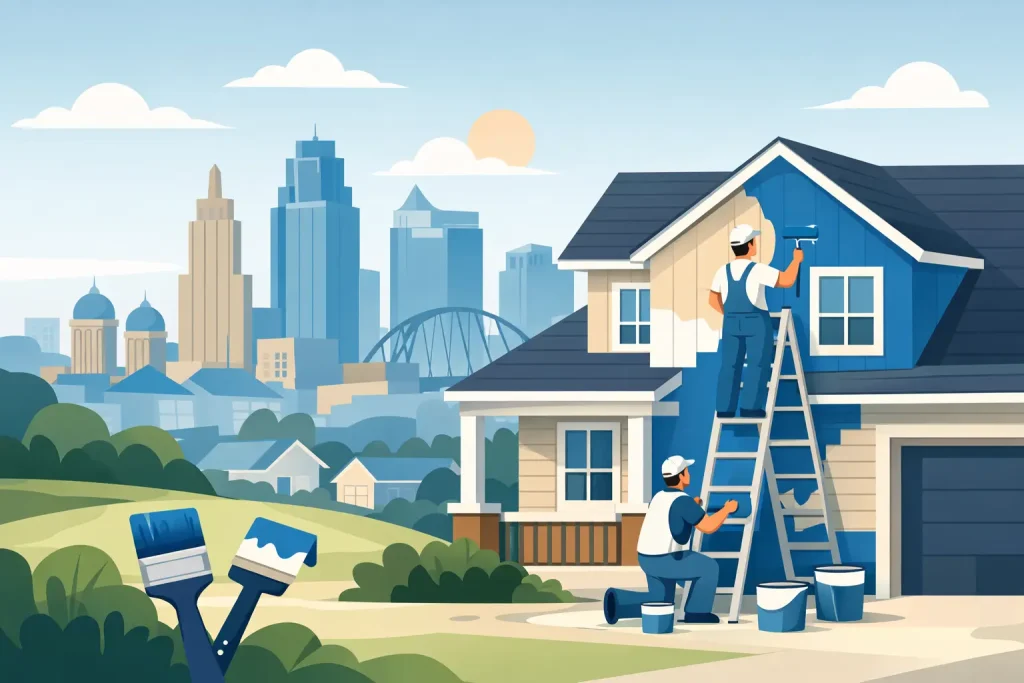
Kansas City weather does not do your siding any favors. One season brings heavy sun, the next brings driving rain, then winter shows up and tests every loose board, crack, and failing patch of paint. That is why exterior house painting Kansas City homeowners put off for too long usually turns into a bigger repair bill later.
A fresh exterior paint job is not just about making a house look better from the street. It helps protect wood, trim, siding, and other surfaces from moisture and wear. It can also help you spot damage early, before it becomes a carpentry problem instead of a paint problem.
Why exterior house painting in Kansas City matters
Kansas City homes deal with a little bit of everything. Heat, humidity, storms, and freeze-thaw cycles all work against exterior surfaces. Paint is one of the first lines of defense, but it only works when the surface underneath is properly cleaned, repaired, and coated.
When paint starts peeling, chalking, or cracking, the issue is rarely cosmetic alone. Moisture can get behind weak spots. Wood can soften. Caulk can fail around windows and doors. If you wait too long, the project shifts from repainting to repair work, and that usually means a higher total cost.
That is why timing matters. Painting too early wastes money if the old coating still has life left. Painting too late can mean replacing trim, fascia, or sections of siding that could have been protected sooner. For most homeowners, the smart move is getting an estimate when the warning signs first show up.
Signs your home is ready for exterior house painting Kansas City weather can handle
Most people notice fading color first, but there are other clues that matter more. Peeling edges, blistering paint, exposed bare wood, and cracked caulk all point to a coating system that is breaking down. If your trim feels soft in spots or you see dark staining near joints, there may already be moisture getting in.
Another common sign is when one side of the house looks worse than the others. South- and west-facing walls usually take more sun and weather exposure, so failure often shows up there first. That does not always mean you can paint only one side. Sometimes spot work makes sense, but in many cases uneven wear means the full exterior is nearing the same stage.
Homes that have not been painted in many years can also have hidden prep needs. Older layers may be loose under the surface, even if they still look mostly intact from the ground. A professional inspection helps separate a simple repaint from a more involved restoration job.
What affects the cost of exterior painting
Homeowners usually want a number right away, which makes sense. The honest answer is that cost depends on the size of the home, the condition of the surfaces, the height and layout, and how much prep is needed before paint goes on.
A straightforward repaint on sound siding costs less than a project with scraping, sanding, caulking, wood repair, and problem areas around windows or trim. Material choices matter too. Better exterior coatings generally hold up longer, but they come with a higher product cost upfront. That trade-off can be worth it if it helps extend the life of the job.
Color changes can also affect pricing. Going from a dark color to a much lighter one, or the other way around, may require additional coats for proper coverage. The same goes for homes with multiple paint colors, detailed trim, shutters, or porches that increase labor time.
For many families, the bigger issue is not whether the house needs painting. It is how to fit the project into the budget without waiting another year and risking more damage. That is where a free estimate and payment flexibility can make a real difference. If labor costs can be spread out with no interest, the project becomes easier to schedule before minor issues grow.
Good exterior painting starts with prep
The part homeowners notice most is the final color. The part that determines how long the job lasts is the prep.
A proper exterior painting project usually starts with washing the surfaces to remove dirt, mildew, chalking, and loose material. After that comes scraping failing paint, sanding rough transitions, sealing gaps with caulk, and priming bare or repaired areas as needed. If there is damaged wood or trim, that should be addressed before finish coats go on.
This is where shortcuts show up later. Paint applied over dirt, loose coating, or active moisture problems may look fine for a short time, then start failing much sooner than expected. Homeowners often think the paint itself was the problem when the real issue was poor surface preparation.
That does not mean every home needs extreme prep. Some exteriors are in decent shape and only need cleaning, light scraping, and spot priming. Others need more attention. The right approach depends on current condition, not a one-size-fits-all package.
Choosing colors that work on Kansas City homes
Most homeowners want a color that looks current but still fits the neighborhood. That is a smart way to think about it. Trendy choices can look great, but the exterior of a home is not as easy to change as a wall inside.
Neutral body colors with clean trim remain a safe choice because they age well and appeal to more buyers if you plan to sell later. Darker colors can look sharp, but they show fading more quickly on some elevations and may absorb more heat. Lighter colors tend to reflect heat better and often make maintenance wear less obvious over time.
Roof color, brick tone, stonework, and landscaping all matter too. A paint color that looks good on a sample card may clash with fixed features once it is on the house. Testing is worth the extra step, especially on homes with mixed materials.
When to schedule exterior painting
The best painting weather usually falls in the milder parts of the year, but the right timing depends on temperature, humidity, and rain patterns. Exterior products need proper conditions to cure and bond well.
Spring and fall are often strong seasons for exterior work in Kansas City, though summer can work too when the schedule and weather line up. What homeowners should keep in mind is that waiting for the perfect month can backfire. Good contractors book up, and a project that starts as preventive maintenance can turn urgent after another season of weather exposure.
If your exterior is already showing clear wear, it is worth getting on the calendar sooner rather than later. An estimate can tell you whether the project should happen immediately or whether you still have some time.
What to expect from a professional contractor
A good exterior paint job should come with clear communication, not guesswork. Homeowners should know what surfaces are being painted, what prep is included, whether repairs are part of the scope, how colors will be handled, and what the payment terms look like.
That last point matters more than many contractors admit. People often delay needed work because they do not want a large labor bill all at once. A company that offers free estimates and no-interest financing on labor can remove a major reason projects get postponed. For Kansas City homeowners trying to protect their property while staying on budget, that is not a small benefit. It is often what makes the difference between doing the work now and hoping the exterior lasts one more season.
Half Now Half Later Painting & Remodeling LLC is built around that practical reality. Homeowners want solid workmanship, but they also want a straightforward path to getting the job done without unnecessary financial strain.
A paint job should do more than change the color
The right exterior project makes a house look cleaner, better kept, and more valuable from the curb. More importantly, it helps protect what is underneath. If your home is showing signs of wear, the best next step is not guessing how much longer it will last. It is getting a clear estimate, understanding the condition of the surfaces, and making a plan that fits your budget before the weather makes the decision for you.