
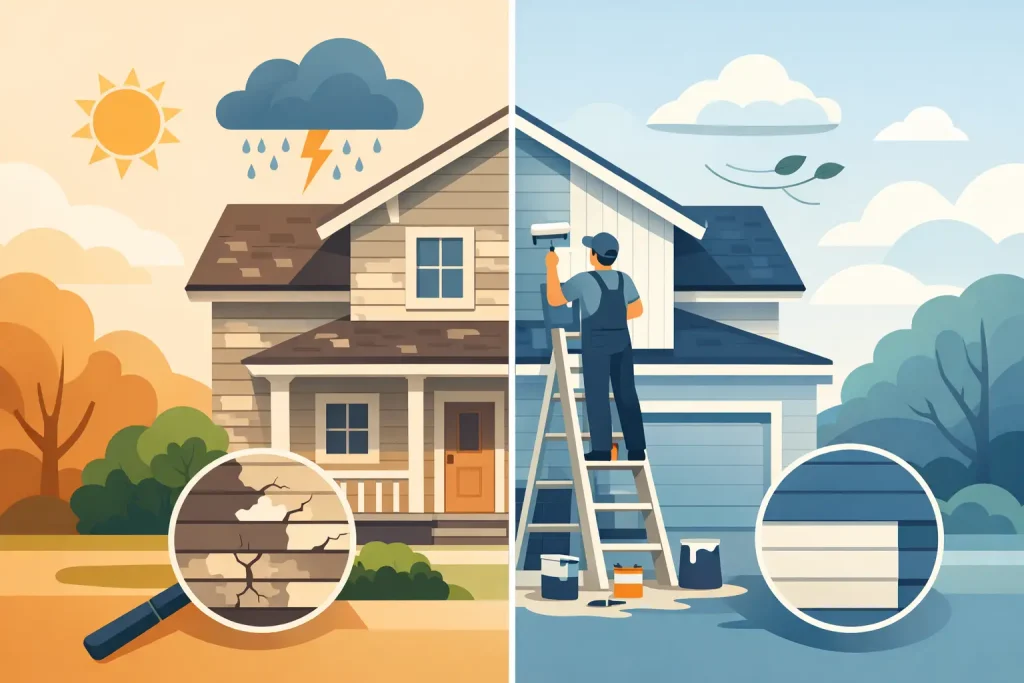
Fresh exterior paint usually does not fail all at once. It starts with small signs – fading on the sunny side, peeling near trim, caulk lines opening up, or bare spots showing through where water hits hardest. If you are wondering when to repaint house exterior surfaces, the answer is usually before those small signs turn into wood rot, siding damage, and a much bigger bill.
For most homeowners, repainting is part appearance and part protection. A clean, solid paint job helps your house look cared for, but it also acts as a shield against sun, rain, humidity, and temperature swings. Waiting too long can turn a paint project into a repair project, and that is where costs start climbing.
When to repaint house exterior based on age
A common starting point is the age of the current paint job. Many homes need exterior repainting every 5 to 10 years, but that range is broad for a reason. Surface type, weather exposure, paint quality, and prep work all make a real difference.
Wood siding often needs more attention than other materials because it expands, contracts, and holds moisture more easily. Stucco can hold up well, but cracks and staining may show earlier than expected. Fiber cement tends to last longer if it was properly primed and painted. Aluminum and vinyl siding may not need repainting as often, though fading can still make the home look older and more worn than it really is.
If your home was painted recently and it already looks rough, the issue may not be timing alone. Poor surface prep, low-grade paint, and rushed application can shorten the life of an exterior paint job by years.
Signs your house is ready for repainting
The clearest answer to when to repaint house exterior areas is what you can actually see. Paint tells you when it is losing its hold.
Fading is often the first clue. Dark colors usually show it fastest, especially on sides of the house that get direct afternoon sun. Fading alone may seem cosmetic, but it can also mean the paint film is breaking down.
Peeling and cracking are stronger warnings. Once paint starts lifting off the surface, moisture can get underneath and keep spreading the damage. On wood trim and siding, that can lead to swelling, soft spots, and rot.
Chalking is another sign homeowners miss. If you run your hand across the siding and get a powdery residue, the paint is wearing out. It may still cover the house, but it is no longer protecting it the way it should.
You should also pay attention to failed caulk around windows, doors, and joints. Sometimes the paint itself is only part of the problem. Open seams let water in, and repainting usually works best when those problem areas are repaired at the same time.
Weather matters more than most people think
Exterior paint life is not just about the calendar. It is also about what your house has been through.
In the Kansas City metro, homes deal with hot summers, freezing winters, heavy rain, wind, and plenty of humidity. That mix can be hard on siding, trim, and exposed wood. South- and west-facing walls usually wear faster because they take more direct sun and heat. Shaded sides may keep color longer but can have more mildew and moisture buildup.
That means one side of your home may look fine while another clearly needs attention. A full repaint is often the cleanest solution for a consistent finish, but there are cases where one section is failing much faster than the rest. A good estimate should account for those differences instead of treating every exterior the same.
Surface type changes the timeline
Not every exterior follows the same repaint schedule. The material under the paint matters.
Wood siding and trim usually need the closest watch. They are more likely to crack, peel, and absorb moisture, so repainting often comes sooner. Stucco can go longer between paint jobs if it stays structurally sound, but hairline cracks should not be ignored. Brick that has been painted can last a while, but once painted, it needs ongoing maintenance because the coating becomes part of the surface system. Fiber cement generally gives homeowners a longer cycle, though that depends on installation quality and prior paint condition.
Older homes may also have layers of previous paint underneath. If those lower layers are failing, a new coat will not solve the problem for long. In those cases, the real issue is preparation, not just repainting.
The best season to repaint outside
Timing is not only about need. It is also about getting the job done under the right conditions.
Spring and fall are often the best times for exterior painting because temperatures are more moderate and humidity is usually easier to manage. Paint needs the right window to bond and cure properly. If it is too hot, too cold, or too damp, the finish may not last the way it should.
Summer can still work, especially with proper scheduling and product selection, but extreme heat and direct sun can create problems during application. Winter is generally less ideal for full exterior projects unless conditions are unusually mild and the products are designed for lower temperatures.
If you already see peeling, exposed substrate, or water-related wear, it is usually better to schedule the work sooner rather than wait for the perfect month. Delaying necessary repainting can lead to repairs that cost more than the paint job itself.
Repaint sooner if you are seeing damage, not just wear
There is a difference between normal aging and active failure. Mild fading or a dated color may give you some flexibility. Peeling wood trim, cracked caulk, soft fascia boards, and visible moisture stains are more urgent.
That is where homeowners sometimes lose time trying to stretch one more season out of the exterior. If water is getting behind the paint, waiting rarely saves money. It usually does the opposite.
A repaint can also make sense before selling a home, especially if curb appeal has dropped. Exterior condition is one of the first things buyers notice, and old paint can make a house feel less maintained even if the inside is in good shape.
A new color is a valid reason too
Not every repaint is about failure. Sometimes the house is structurally fine, but the color is dated, patchy, or no longer fits the look you want. That is still a practical reason to repaint.
A fresh exterior can change how the whole property feels. It can brighten a shaded lot, modernize an older home, or make trim and accents stand out in a better way. If the current paint job is still holding, you may have more flexibility in timing, but it is still worth checking for hidden problem spots before work begins.
Why professional prep matters so much
Homeowners often ask how to make the next exterior paint job last longer. The short answer is prep.
Cleaning, scraping loose paint, sanding rough areas, repairing damaged wood, sealing joints, and priming where needed are what give topcoats a fair chance to hold up. Skipping those steps may lower the upfront price, but it usually shortens the life of the job.
That is why estimates can vary. One contractor may be pricing a quick repaint. Another may be pricing the prep and repairs needed to make the finish last. The lower number is not always the better value if the paint starts failing again in a few years.
For homeowners trying to balance upkeep with budget, this is where payment flexibility can matter. A larger exterior project is easier to move forward with when the labor cost does not have to be paid all at once. Half Now Half Later Painting & Remodeling LLC builds around that reality because many people are ready to fix the problem long before they are comfortable with one big upfront labor payment.
How to decide if now is the right time
If your exterior paint is more than several years old, showing visible wear, or exposing the home to moisture, it is time to get it looked at. You do not have to guess from the driveway. A solid estimate should tell you whether you need a full repaint now, minor repairs first, or a little more time before the job becomes urgent.
The best time to repaint is usually a little earlier than most homeowners think. Once paint stops protecting the house, the project is no longer just about appearance. If you are seeing the warning signs, getting ahead of it now can save money, protect your home, and make the whole process a lot less stressful.