Worn Out Deck Gets New Railings, Boards, and a Fresh Stain
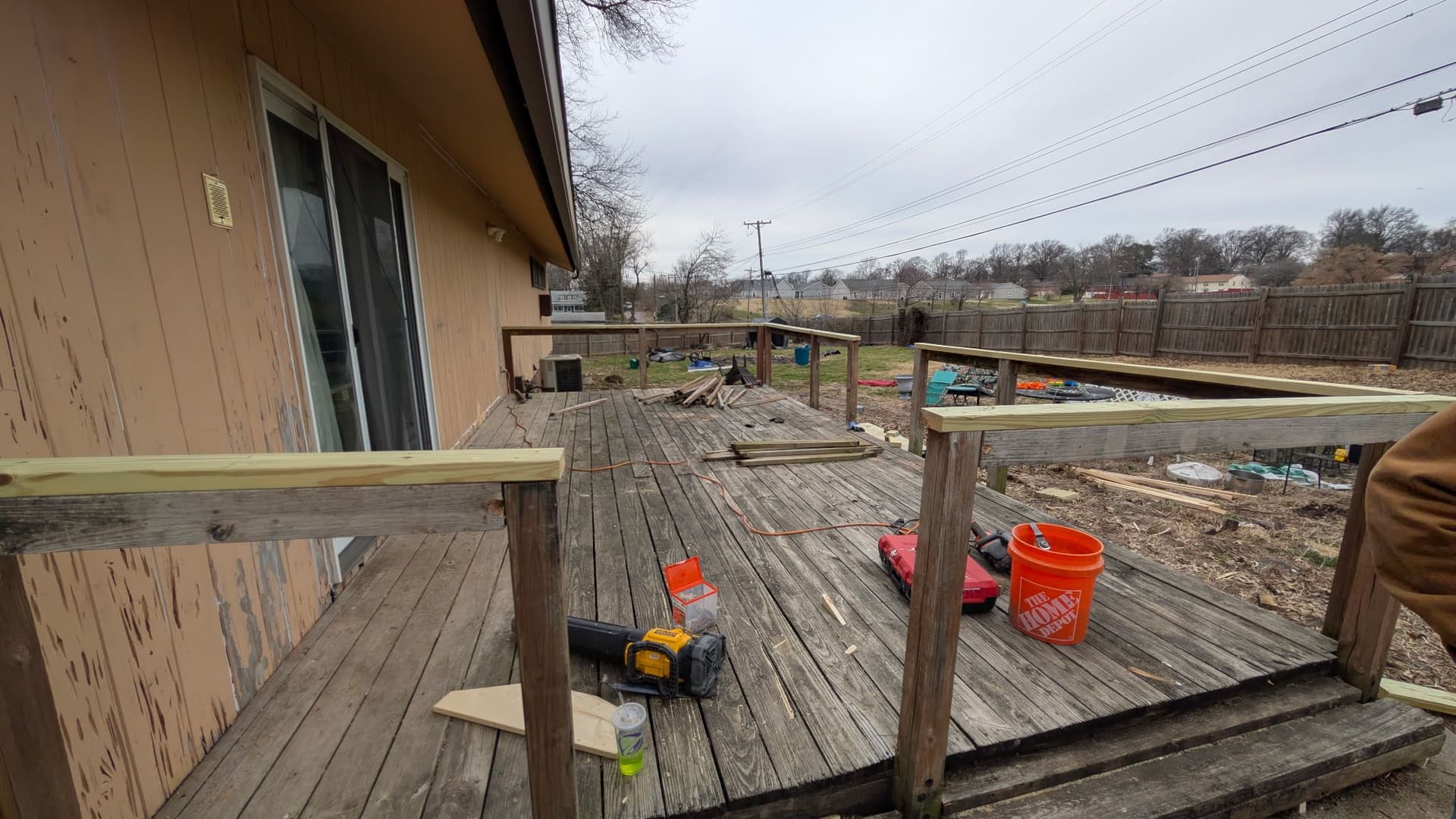
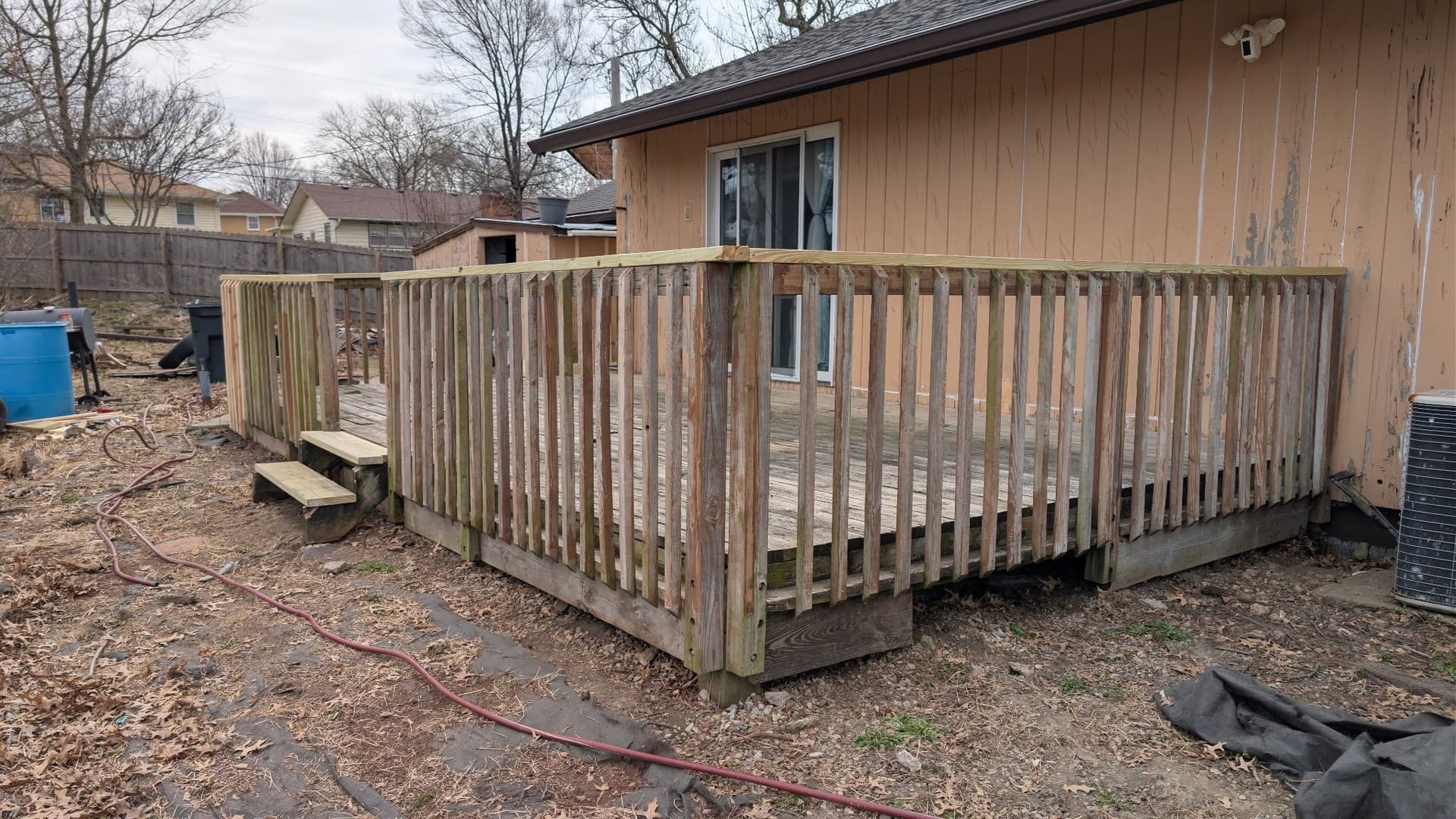
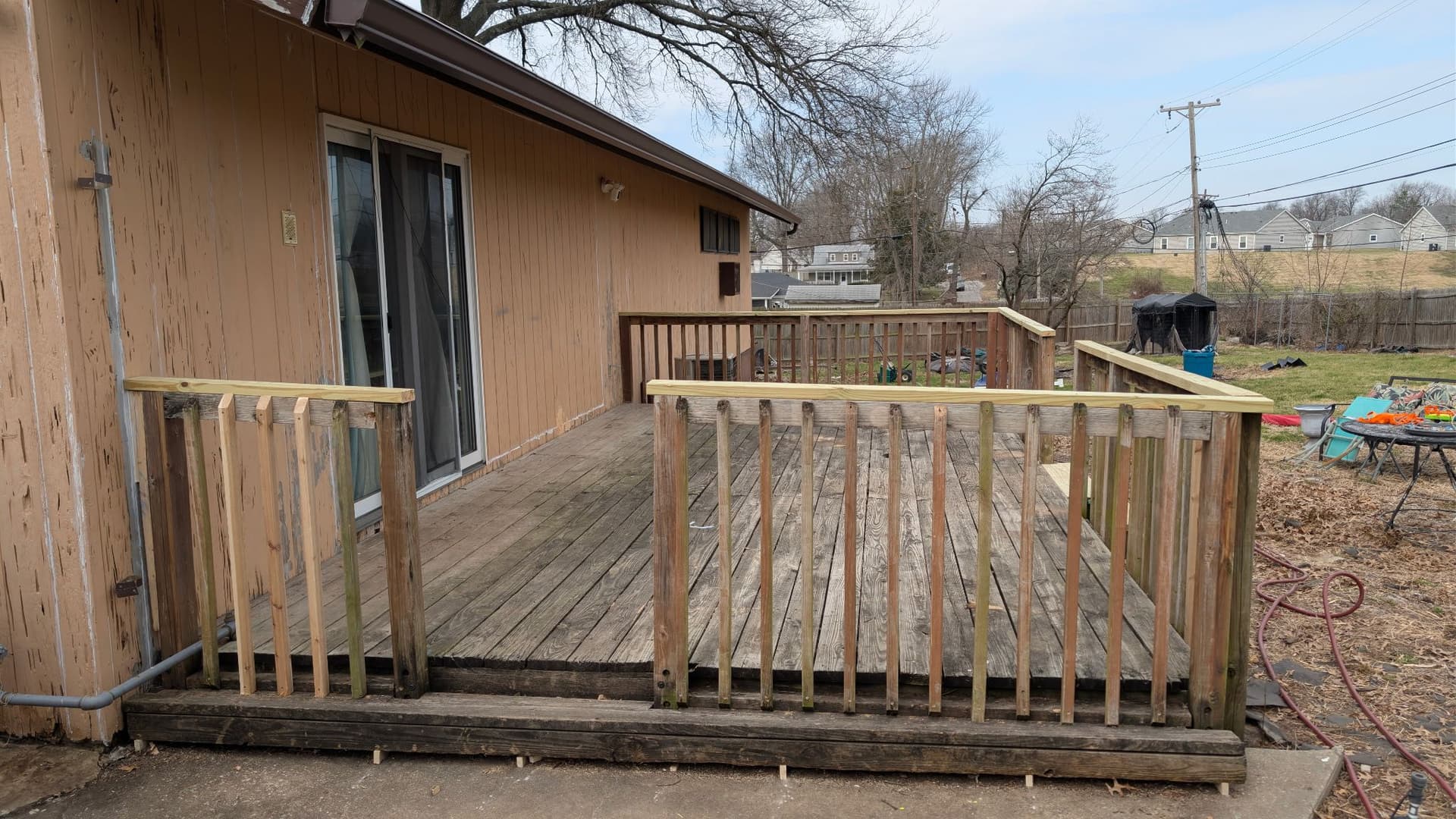
A deck that's been left to the elements long enough starts to tell on itself. The wood goes gray, the railings get wobbly, and what was once a nice outdoor space just becomes something you walk past. That's exactly where this one was before we got started.
We tackled this in stages. First up was the carpentry work - replacing the railings and swapping out boards that had seen better days. New pressure-treated lumber went in where the old stuff had deteriorated, and we made sure everything was structurally solid before moving to the next step. That part matters more than most people realize. A fresh coat of stain over a weak railing doesn't fix anything.
Once the carpentry was done, we power washed the entire deck surface. Years of grime, mildew, and weathered wood fiber had to come off before anything else could go on. Skipping that step is one of the most common mistakes homeowners run into when trying to DIY a deck refresh - stain won't bond properly to a dirty surface, and the finish ends up peeling within a season.
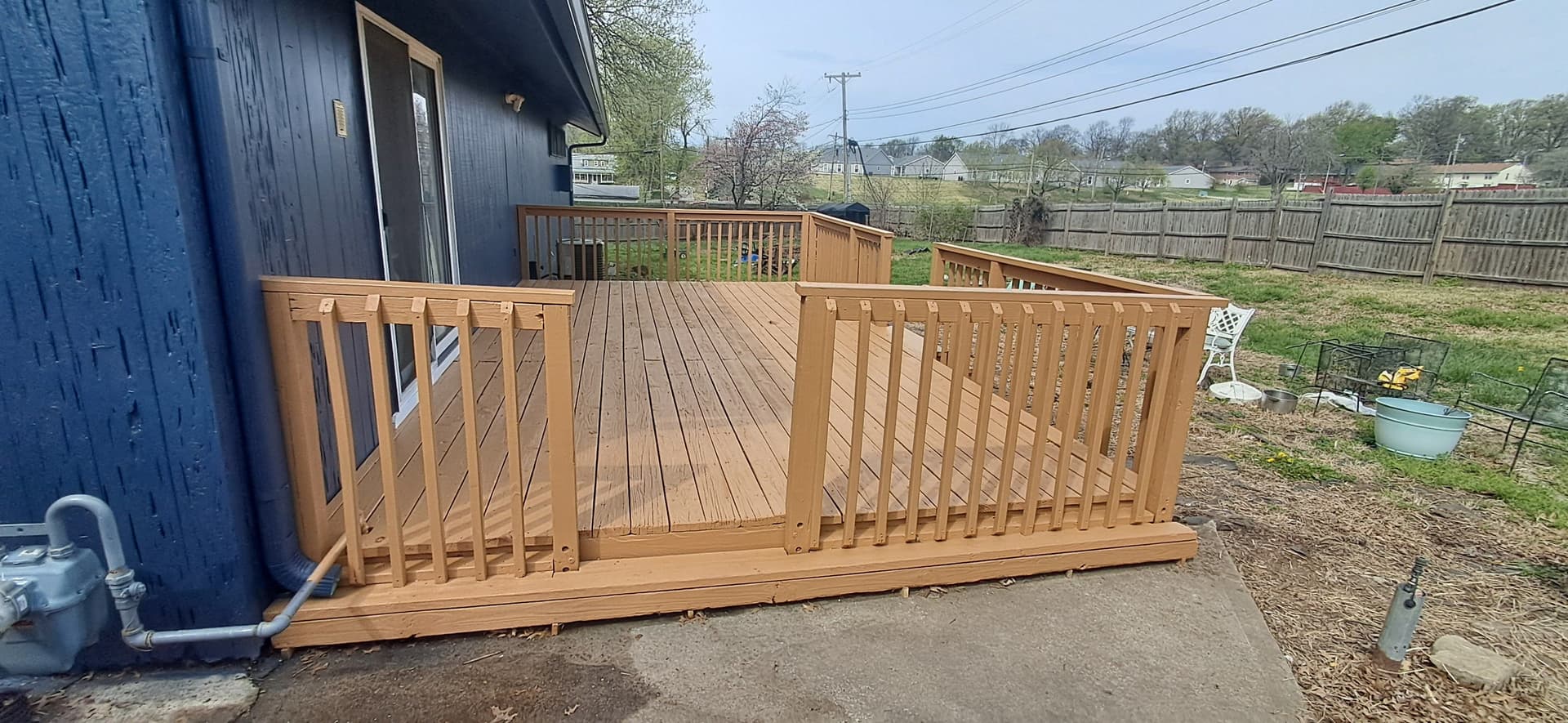
Then came two full coats of stain. Not one, two. The first coat soaks in and seals the wood. The second coat builds the color and adds the protection. The difference between one coat and two is significant, both in how it looks and how long it lasts.
The finish result is a deck that actually looks like it belongs to the house again. The color is warm and even across the whole surface, the railings are tight and clean, and the whole thing is ready to be used instead of avoided.